


Volodymyr Zhukov
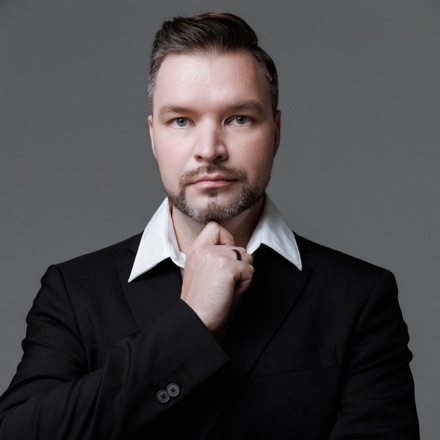
Volodymyr Zhukov founded Cognitive Biases Academy, funds it as free public infrastructure, and reviews every article against the sources it cites.
His role on this site
Volodymyr started Cognitive Biases Academy and pays for it. He also signs off on what gets published: an article goes live only after it has been checked against the academic work it cites, and the "Reviewed by" line on the homepage means that check has happened.
He is not a clinician or an academic psychologist, and this site does not present him as one. His review is an editor's review with a practitioner's eye: does the article say what the research says, does it say it plainly, and does it still say it after translation into 65 other languages.
Background
He has spent more than twenty years building technology companies, relationships, and deals. Today he works in Silicon Valley as a tech M&A and exit advisor, working at the stage where founders sell a company or close its decisive rounds. He is also a venture partner at Network VC and a fractional chief business officer for technology companies. He has given more than 300 talks and has been featured in Forbes, Bloomberg, and Yahoo Finance.
That work happens where cognitive biases get expensive. A price anchored by the first number on the table, a product kept alive by sunk costs, a forecast carried by overconfidence, a roadmap built on the planning fallacy: the patterns documented in this library are the ones that decide real outcomes in negotiations and boardrooms. The academy grew out of wanting a plain-language field guide to them that anyone could read, not only people in deal rooms.
Personal Essence Methodology
Volodymyr is the author of the Personal Essence Methodology (PEM), a structural framework for people whose results depend on their own judgment, relationships, and follow-through. It draws on 1,041 peer-reviewed sources, and its self-assessment is free at pem.academy. The academy's interest in how people actually decide, rather than how they believe they decide, comes from the same place.
Why he funds this
He backs the project because he thinks the slow erosion of how people reason is a bigger threat than any single crisis, and that fixing it only counts if it reaches people in the language they actually think in. That is why the library exists in 66 languages, carries no advertising, and has no paywall. He funds it as long-term public infrastructure and intends to keep it that way.
Elsewhere
- zhukov.consulting: advisory work
- pem.academy: the Personal Essence Methodology
Corrections
Every article in the library ends with its primary sources. If you find a claim that the cited research does not support, or a translation that changed the meaning, say so. Corrections are welcome, and they are how the project improves.